
As we March in, let’s talk about Black history outside of February.
That’s the challenge and here we go:
The Genealogy Situation Room’s Top 10 Black History Jewels 👊🏾
- #10–Does It Begin In 1619?
- #9—Royalty Among Slavery
- #8—Couturier Ann Lowe
- #7—The Inclusion of Exclusion: 1924 Racial Integrity Act
- #6—Maxine Powell, Motown Etiquette Consultant
- #5—Black Businesses Before 1960’s
- #4—There Were Numerous Revolts of the Enslaved in the U.S.
- #3—There is a Rose in Atlanta: Rose Martin Palmer
- #2—Sapelo Island, Georgia | Gullah-Geechee History
- #1—The Initial Efforts for Reparations for U.S. Slavery
- 💫 MYSTERY BONUS ITEM
#10—-Does It Begin In 1619?
Is Point Comfort, Virginia in 1619 the beginning of Africans in servitude in America? Is 1619 the first time that Africans were in the Americas altogether? No and further, there is evidence that Africans were venturing to the Americas before Columbus.
1619 is relevant from the British Colonial American perspective, so the date is not a red herring. Still, whether in bondage or exploration, we go beyond that stamp.
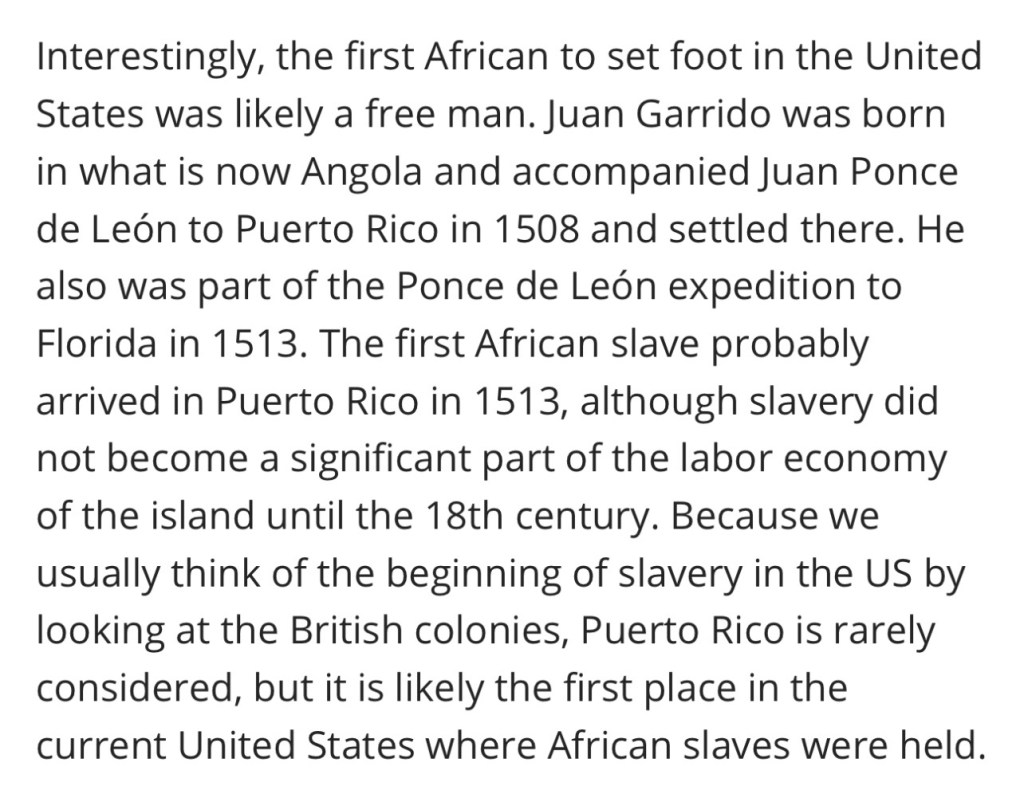
1513 is of note, but let’s go further.
According to an American historian and linguist Leo Weiner of Harvard University, one of the strongest pieces of evidence to support the fact that Africans sailed to America before Christopher Columbus was a journal entry from Columbus himself.
Africans Came Before Columbus
In Weiner’s book, “Africa and the Discovery of America,” he explains that Columbus noted in his journal that the Native Americans confirmed “black skinned people had come from the south-east in boats, trading in gold-tipped spears.” It was found also that the ratio of properties of gold, copper, and silver alloy were identical to the spears then being forged in African Guinea.
Enormous Olmec head statues with African facial characteristics found throughout Central and South America support that Africans had settled in America long before its apparent “discovery.”
BOOK RECOMMENDATION:

Leo Wiener
American Anthropologist
, New Series, Vol. 23, No. 1 (Jan. – Mar., 1921), pp. 83-94 (12 pages)
#9—Royalty Among Slavery
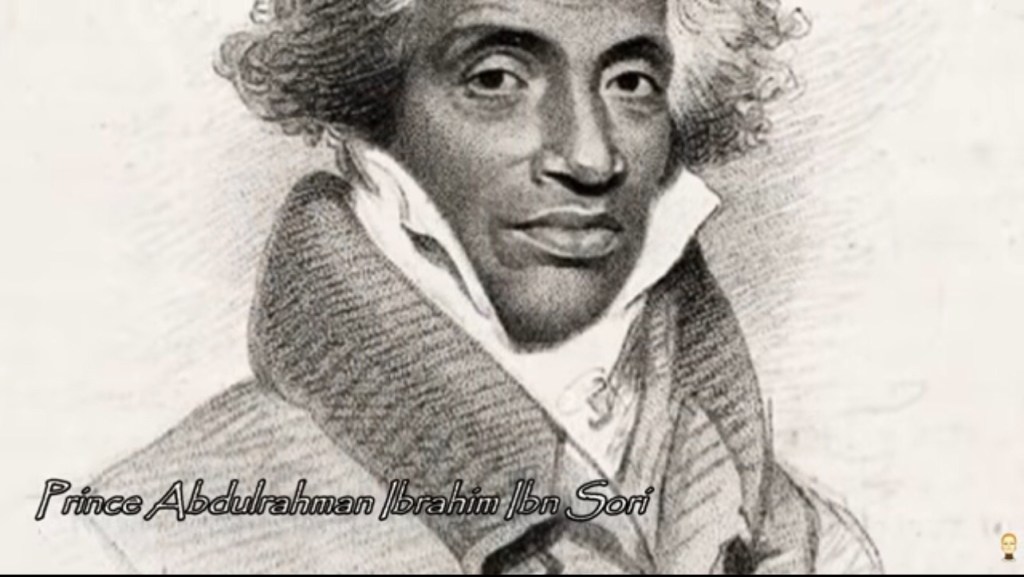
The story of Prince Abdul Rahman Ibrahima ibn Sori (1762-1829) has been documented and even presented in a documentary by PBS, Prince Among Slaves.
Prince Rahman is just one example of African nobility that was ensnared in the atrocities of trans-Atlantic slavery. The thought of anyone—regardless of class—-becoming a part of such a monstrous system is horrifying. Still, it is important to learn and know that those who were enslaved were people who had names, stories, lives, history, and status—some royal— before their cruel fate.


#8—Couturier Ann Lowe

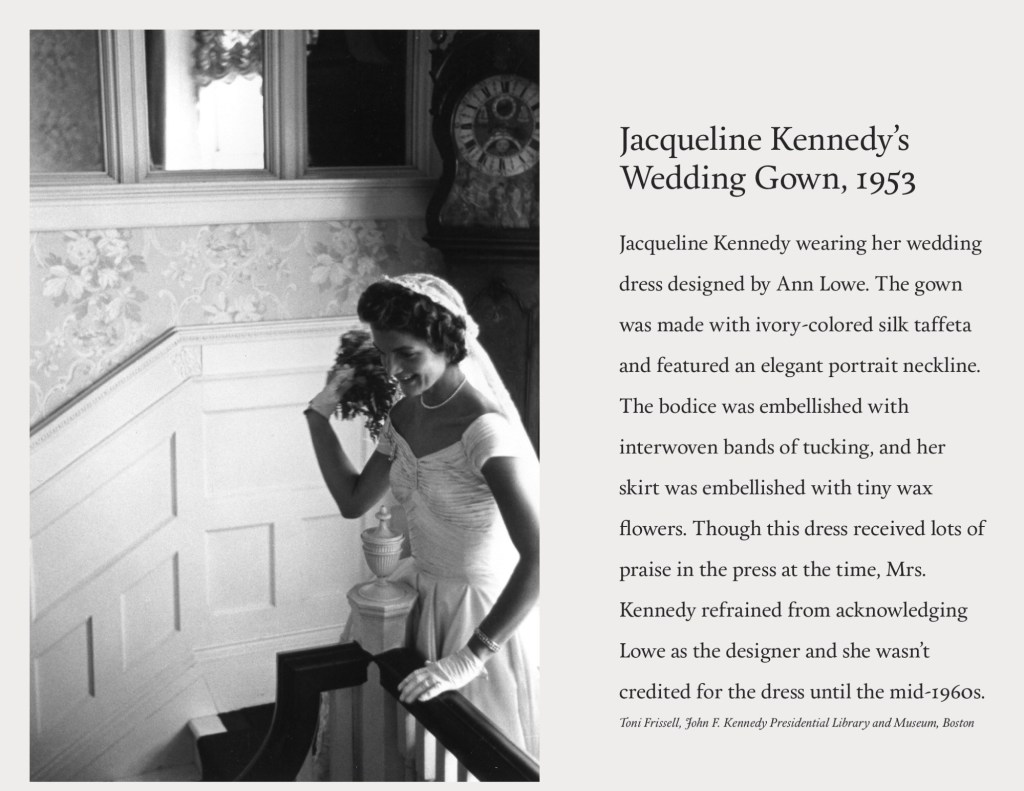
Considered one of America’s most significant designers, Ann Lowe was born in Clayton, Alabama, around 1898 and reared in Montgomery.
Ann Lowe
Ann Lowe designed the wedding dress for future U.S. First Lady Jacqueline Bouvier Kennedy but was uncredited at the time. Not only that, Ann Lowe was the go-to high fashion designer for many wealthy American white women. It is wonderful to see her life and legacy receive increasing attention and acclaim.
BOOK RECOMMENDATION:

#7—The Inclusion of Exclusion: 1924 Racial Integrity Act
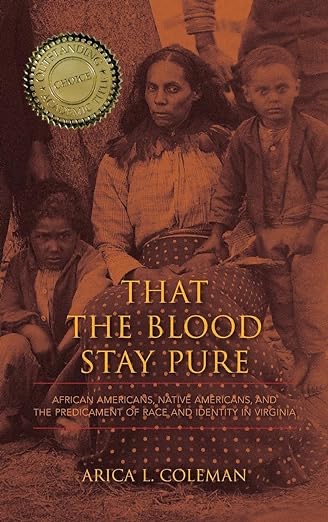
For many of us, to be Black American means to have some quantum of an Indigenous genetic tie. Believe it or not, at one time it was outright illegal to identify with Native American ancestry if you were deemed to be “Negro”.
…Racial Integrity Act, which was passed in Virginia in 1924. The new law prohibited interracial marriage and ushered in a long period of discriminatory racial designation administered by the government. One of the Act’s main proponents was a physician named Walter Ashby Plecker. As the head of Virginia’s Bureau of Vital Statistics from 1912-1946, Plecker was responsible for ensuring that all infants born in Virginia received birth certificates that included their racial designation. An active eugenicist, Plecker used bureaucracy as a weapon against Black and Indigenous people across the state of Virginia.
The Racial Integrity Act, 1924: An Attack on Indigenous Identity (U.S. National Park Service
It wasn’t until 1967 that the Racial Integrity Act was overturned by the United States Supreme Court in the Loving vs. Virginia case. Nevertheless, Plecker’s legacy of racial discrimination still impacts communities today, in particular Tribal communities. Many find it difficult to document their ancestral lineage due to the “paper genocide” that identified all non-white individuals as “colored” regardless of their identity. Despite this challenge, seven Tribes have gained federal recognition in Virginia.

Surnames, by Counties and Cities, of Mixed Negroid Virginia Families Striving to Pass as Indian or White (ca. 1943) aka “Plecker’s List” —Defy Plecker, find your people…
BOOK RECOMMENDATION:
#6—MAXINE POWELL, MOTOWN ETIQUETTE CONSULTANT
U.S. political strategist, Lee Atwater, is credited with the maxim “perception is reality.” His problematic politics aside, that saying may have more truth than we want to give credit to. Fair or no, how you present is very well how you may be received.
In the Motown era of entertainment, no one understood this more than its founder, Berry Gordy, and his esteemed etiquette maven, Maxine Powell.
If Motown Records was an assembly line of talent, Ms. Powell provided the polish. Marvin Gaye, Charlie Atkins, Diana Ross, and The Supremes were just some of the artists in her charge.

1995 Maxine Powell Interview—courtesy wgbh.org
Maxine Powell: “Body language. Everybody walks, but I teach how to glide. I teach how if you drop something, how to pick it up. If your slip comes down around your feet, how to stand in the basic standing position and step out of it smiling, with your hip bones pushed forward and the buttocks pushed under. You never, never protrude the buttocks because it means an ugly gesture, you see? They learned all of those things. I was turned loose to do whatever was necessary to make the artist look first-class.”
Remembering The Woman Who Gave Motown Its Charm : Code Switch : NPR
#5—-BLACK BUSINESSES BEFORE 1960’$
In every city and town, there is a remnant of living memory—a memory of going into vibrant, flourishing districts of Black business. Unfortunately, it seems that the advent of important progress in one area sacrificed the established inner-sanctum network of homegrown commerce in another.
Business historian Juliet E. K. Walker refers to the era from 1900 to 1930 as the “golden age of black business” where “leading black capitalists . . . reflected their success within a black economy, which developed in response to the nation’s rise of two worlds of race.”
The Golden Age of Black Business—Harvard Business School

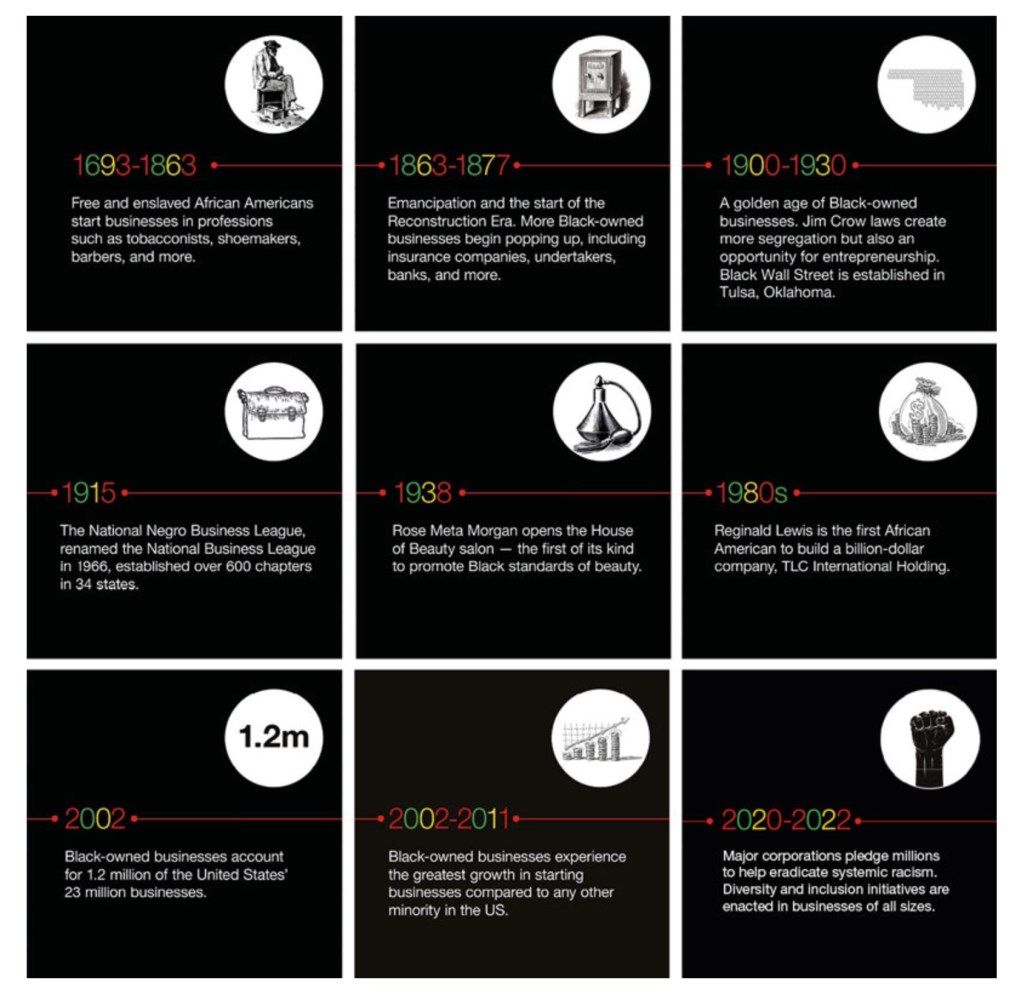
The Library of Congress writes about small businesses: “After the Civil War, African American entrepreneurs founded businesses to serve their own communities, including barber shops, funeral homes, hotels, retail stores, restaurants and catering businesses, newspapers, and beauty products. Small African American businesses and their owners might not be as well-known as Madame C.J. Walker and her cosmetics empire; however, their contributions to their communities cannot be overstated.”
#4–There Were Numerous Revolts of the Enslaved in the U.S.
BOOK RECOMMENDATION:

American Negro Slave Revolts by Herbert Aptheker
Current sentiment aside, our people fought. They resisted in various ways and many times they paid the price with their lives. We are who we are because they (our ancestors) not only survived, they revolted.
For the two centuries preceding the American Civil War (1861–65), one historian found documentary evidence of more than 250 uprisings or attempted uprisings involving 10 or more slaves whose aim was personal freedom.
Slave rebellions | History, Examples, & Facts | Britannica
Stono Rebellion, 1739 | PBS.org
The New York City Conspiracy of 1741 | Historical Society of the New York Courts
Gabriel’s Conspiracy, 1800 | Encyclopedia Virginia
German Coast Uprising, 1811 | Smithsonian Magazine
Nat Turner Revolt, 1831 | Encyclopedia Virginia
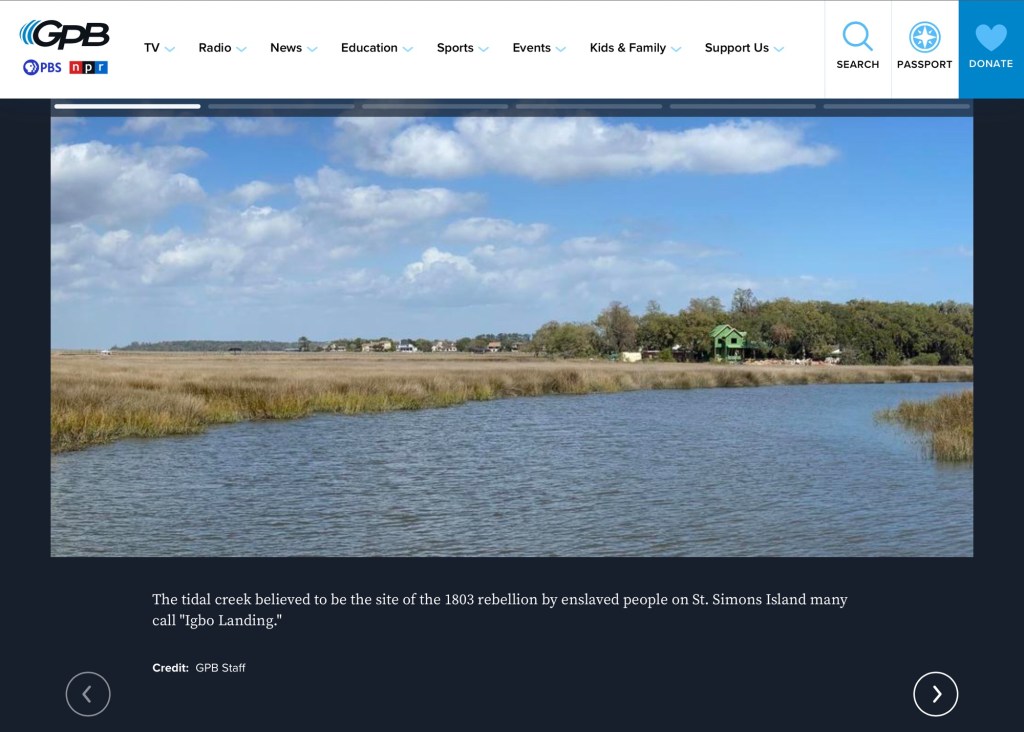
Dunbar Creek, Igbo Landing, Georgia | GPB
“…about 75 Igbo people decided to rebel against the slavers who had taken them on the three-month voyage from West Africa to St. Simons Island. The place where that happened is called “Igbo Landing” by many.
It’s a story retold by artists ranging from Toni Morrison to Beyonce. Now the Georgia Historical Society is acknowledging the space on St. Simons Island with a new roadside historic marker.”
Additionally, I have written here about an 1840 court case involving several enslaved souls who revolted by attempting to poison their holder, Dr. Orris A. Browne, with blue ground glass…
Slave Rebellions and Uprisings | American Battlefield Trust
African-American Rights Movements: Slave Rebellions | Montana State University Billings
#3 There is a Rose in Atlanta: Rose Martin Palmer
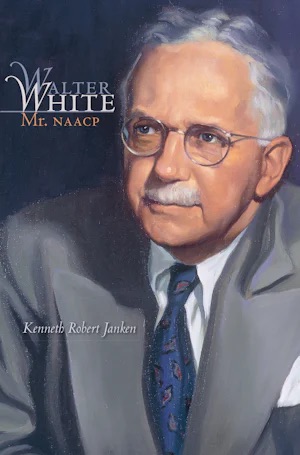
Mrs. Rose Martin Palmer is an enduring strength and treasured memory keeper in Atlanta, Georgia. She’s the daughter of Atlanta Life Insurance vice president, Eugene M. Martin (1888-1969) and his wife, Helen White Martin (1889-1984). Mrs. Rose M. Palmer is also the niece of a national historical figure, NAACP executive secretary, Walter F. White (1893-1955). To add, her husband, Dr. James Lawrence Dibble Palmer Sr (1928-2009), was a physician to many Civil Rights activists. Rose is a gracious champion of her family’s work and legacy and I was honored to meet with her in early 2021.
Thank you, Mrs. Palmer, for all that you do and for who you are—a true rose.
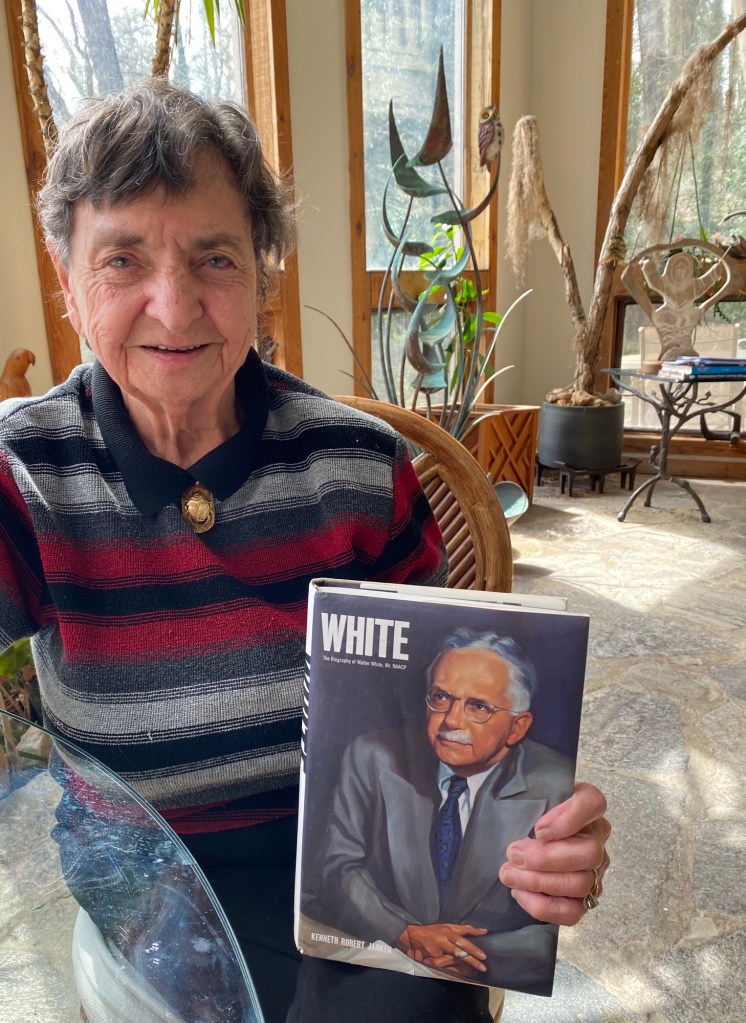
One of those who witnessed the riot was 13-year-old Walter White, the son of a letter carrier. He was black, although he didn’t look it, with blond hair, blue eyes and fair skin. His niece, Rose Martin Palmer, recalls White’s story.
“When they got up to Peachtree, towards the Herndon barber shop, he saw the mob,” Palmer says. “And this little boy with this withered foot ran out of the barber shop. And [Walter] saw him clubbed to death by the mob. And this is what stirred in him the feeling of understanding of what hatred was all about — race hatred.”
This was the defining moment for Walter White, who went on to devote much of his life to improving race relations; he would eventually became the executive secretary of the NAACP.
Century-Old Race Riot Still Resonates in Atlanta : NPR WUSF
BOOK RECOMMENDATION:
#2—Sapelo Island/Gullah Geechee History
Many have heard of the wonderful Lowcountry Gullah-Geechee communities in South Carolina. Did you know that there is a community of Gullah-Geechee people on the Georgia coast who have also held and continue to hold on to tradition and history throughout turbulent change?
LETTER FROM SAPELO ISLAND, GEORGIA: THE LAST SURVIVING GULLAH COMMUNITY
Former slaves set up the community of Hog Hammock so that, separated from the mainland, they could farm, raise livestock, and preserve elements of their African heritage, including the English Creole/African Gullah dialect.
Pacific Standard, 2019
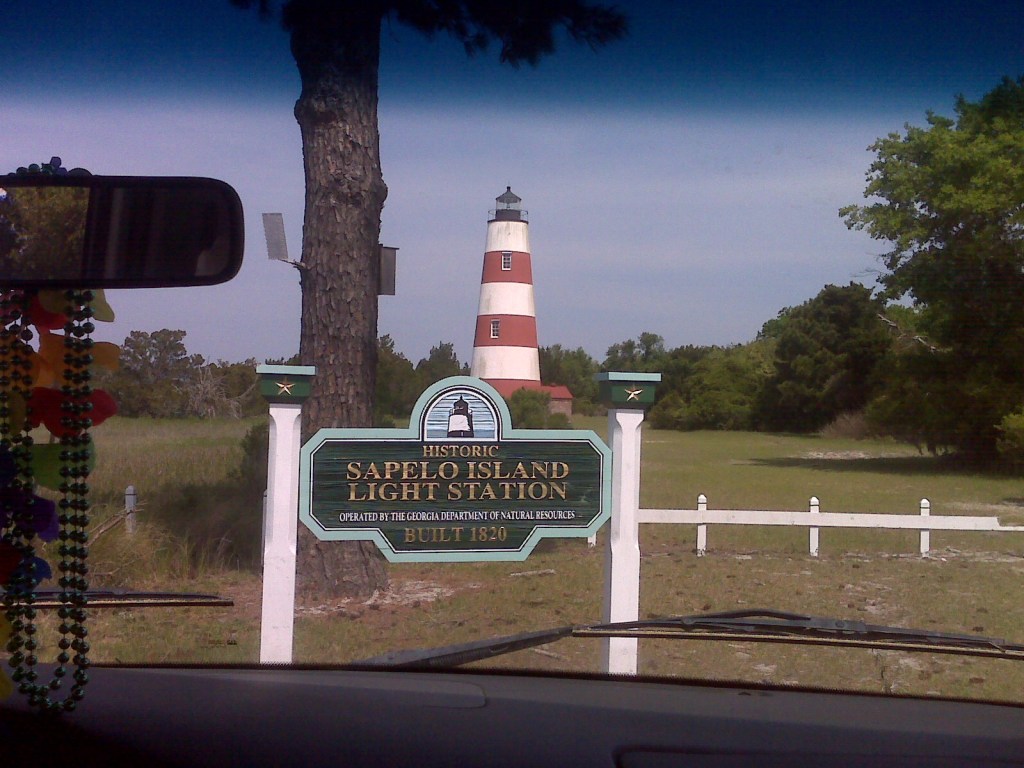
BOOK RECOMMENDATION:

A SALTWATER GEECHEE TALKS ABOUT LIFE ON SAPELO ISLAND, GEORGIA
by Cornelia Walker Bailey and Christena Bledsoe | NPR ARTICLE: Remembering Cornelia Walker Bailey, A Giant Of Gullah Geechee Culture

THE GULLAH GEECHEE PEOPLE
The Gullah Geechee people are descendants of Africans who were enslaved on the rice, indigo and Sea Island cotton plantations of the lower Atlantic coast. Many came from the rice-growing region of West Africa. The nature of their enslavement on isolated island and coastal plantations created a unique culture with deep African retentions that are clearly visible in the Gullah Geechee people’s distinctive arts, crafts, foodways, music, and language.
Gullah Geechee is a unique, creole language spoken in the coastal areas of North Carolina, South Carolina, Georgia and Florida.
THE GULLAH GEECHEE – Gullah Geechee Cultural Heritage Corridor
#1—The Initial Effort for Reparations for U.S. Slavery
Long before TikToks, podcasts, think pieces, and the Internet itself—-even long before the modern Civil Rights movement, there was an effort for repayment of labor, toil, and struggle by the formerly enslaved themselves. The avenue of request: pensions.

From the National Archives, here are some sobering yet unbelievable excerpts of just what the formerly enslaved would encounter. Not only were their efforts thwarted at just about every turn, the U.S. Postal Service effectively became law enforcement to shut their claims down.
…Efforts to help them achieve some semblance of economic freedom, such as with “40 acres and a mule,” were stymied. Without federal land compensation—or any compensation—many ex-slaves were forced into sharecropping, tenancy farming, convict-leasing, or some form of menial labor arrangements aimed at keeping them economically subservient and tied to land owned by former slaveholders.
“The poverty which afflicted them for a generation after Emancipation held them down to the lowest order of society, nominally free but economically enslaved,” wrote Carter G. Woodson in The Mis-Education of the Negro in the 1930s.
In the late 19th century, the idea of pursuing pensions for ex-slaves—similar to pensions for Union veterans—took hold. If disabled elderly veterans were compensated for their years of service during the Civil War, why shouldn’t former slaves who had served the country in the process of nation building be compensated for their years of forced, unpaid labor?…
…The push for ex-slave pensions gained momentum in the 1890s and continued into the early 20th century. This grassroots movement was composed largely of former slaves, their family members, and friends. It emerged during the nadir of American race relations, roughly 1877 into the early 20th century.
Racial segregation officially became the law of the land with the U.S. Supreme Court’s 1896 Plessey v. Ferguson decision, which upheld racial segregation under the “separate but equal” doctrine. Lynchings and race riots were at an all-time high, while civil rights and legal recourse for blacks were virtually nonexistent. Throughout the South, black men were disenfranchised and could not serve on juries.
The pension movement flourished in spite of, or even because of, these obstacles…
…As the association’s membership grew, government surveillance intensified. However, Dickerson, House, and other association officers were not aware of the federal government’s intense interest in their organization and plans to undermine it and the larger movement.
Association Faces Strong Opposition to Pensions from U.S. Government
Three federal agencies—the Bureau of Pensions, the Post Office Department, and the Department of Justice—worked collectively in the late 1890s and into the early 20th century to investigate individuals and groups in the movement…
…The goal of the investigations by the Bureau of Pensions, Post Office Department, and Justice Department was not to determine whether former slaves had a legitimate grievance or claim, but to stifle the movement.
The pension bills submitted to Congress received little serious attention. The Senate Committee on Pensions examined S. 1176 (a bill essentially similar in language to all of the other bills) and wrote an adverse report. This committee received its information (and thus a tainted view of the movement) from none other than the Post Office Department and the commissioner of pensions. The report described freedpeople in the movement as “ignorant and credulous freedmen,” and the committee concluded that “this measure is not deserving of serious consideration by Congress” and recommended “its indefinite postponement.”…
…The Johnson v. McAdoo cotton tax lawsuit is the first documented African American reparations litigation in the United States on the federal level. Predictably, the Court of Appeals for the District of Columbia denied their claim based on governmental immunity, and the U.S. Supreme Court, on appeal, sided with the lower court decision.
The Post Office Department was unrelenting as it continued to search for means to limit House’s influence and curtail the movement…
No Pensions for Ex-Slaves | National Archives
And yet, the balance is still due.
We have a situation. We need to find our people. We can and are doing so here—in The Genealogy Situation Room,
Black History is every.day.
BONUS💫
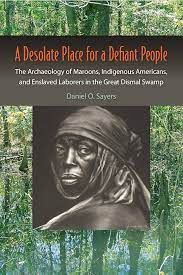
Runaways & The Great Dismal Swamp
Picture it. Marsh. Gators. Mosquitoes. Cypress trees. Any kind of FREEDOM.
Deep in the Swamps, Archaeologists Are Finding How Fugitive Slaves Kept Their Freedom ——-Smithsonian Magazine

People escaping enslavement found refuge in the Great Dismal Swamp. A congressman wants to revive its forgotten history.—-The Wilderness Society
BOOK RECOMMENDATION:

 The Genealogy Situation Room
Very interesting. I learned so much.
LikeLiked by 1 person
So glad to hear that! Thanks for reading and for your feedback.
LikeLike