
What were some folks doing on the historic day of January 1, 1863? Why, selling ye ol’ slaves, of course.
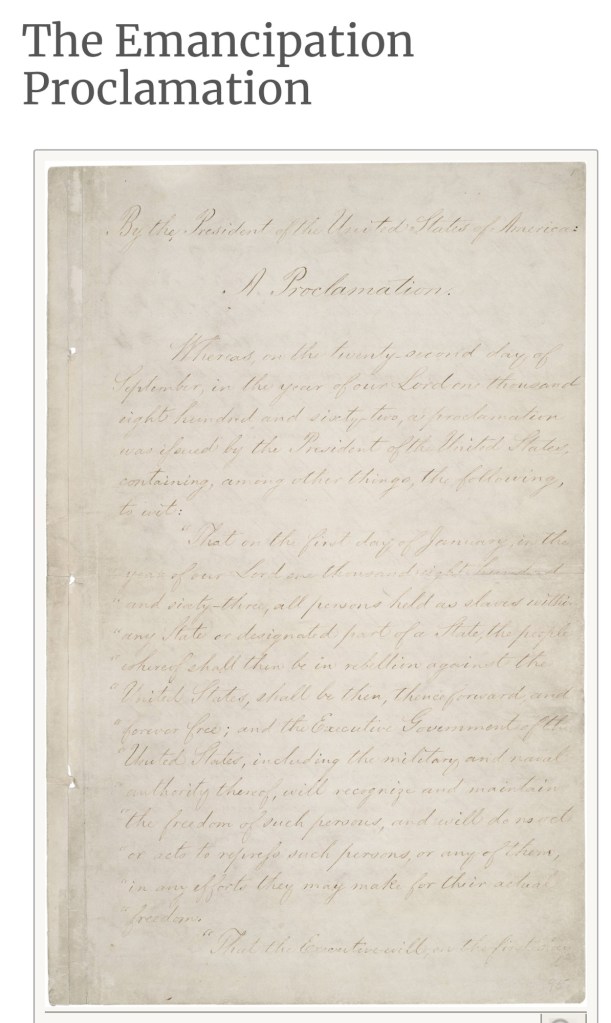
“President Abraham Lincoln issued the Emancipation Proclamation on January 1, 1863, as the nation approached its third year of bloody civil war. The proclamation declared ‘that all persons held as slaves’ within the rebellious states ‘are, and henceforward shall be free.’”
———National Archives website
No doubt, in many parts of the country, particularly the South, and especially in Greensville County, Virginia, January 1, 1863 was just another day for doing business.
According to the following court record, a certain soul named Lucy was actually “sold” on the date that the United States legally ended chattel slavery.
In fact, the wrangling over sums of money received for her “sale” were included in this 1870 chancery complaint.
Chancery Court Record:
Lucy
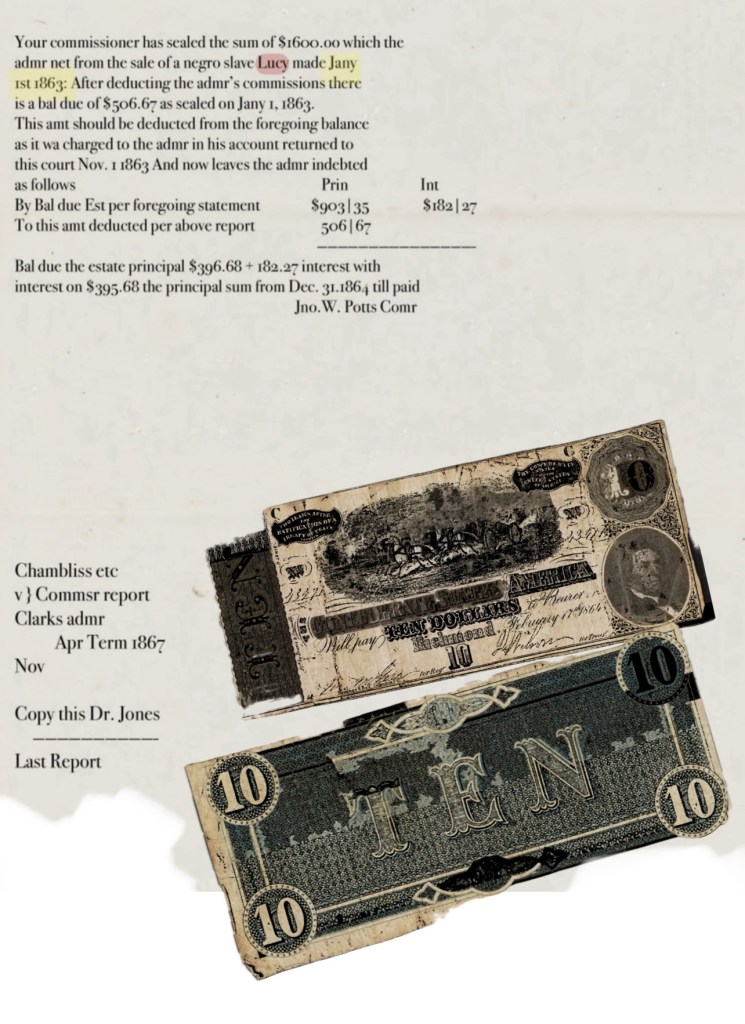
Whatever happened to Lucy? She was “sold” from the estate of Thomas M. Clark in Greensville County, Virginia.
On August 25, 1867, a certain seventeen year old Lucy Clark married a widowed thirty-three year old Edmund Lanier. While we know that not all enslaved people carried the surname of their slaver/most recent slaver, there is a possibility here.
I hope that Lucy was able to escape the surly bonds of bondage sooner rather than later and I further hope that she experienced joy in some kind of freedom.
While June 19, 1865 marked the day that enslaved people in Galveston, Texas were “told” that they were “free,” and yet—even so, slavery (outright and by other names) persisted…
From History.com:
“The 13th Amendment, adopted on December 18, 1865, officially abolished slavery, but freed Black peoples’ status in the post-war South remained precarious, and significant challenges awaited during the Reconstruction period.
Previously enslaved men and women received the rights of citizenship and the “equal protection” of the Constitution in the 14th Amendment and the right to vote in the 15th Amendment, but these provisions of the Constitution were often ignored or violated, and it was difficult for Black citizens to gain a foothold in the post-war economy thanks to restrictive Black codes and regressive contractual arrangements such as sharecropping.
Despite seeing an unprecedented degree of Black participation in American political life, Reconstruction was ultimately frustrating for African Americans, and the rebirth of white supremacy—including the rise of racist organizations such as the Ku Klux Klan (KKK)—had triumphed in the South by 1877.
Almost a century later, resistance to the lingering racism and discrimination in America that began during the slavery era led to the civil rights movement of the 1960s, which achieved the greatest political and social gains for Black Americans since Reconstruction.”
—————-Ana Lucia Araujo, a historian of slavery and the Atlantic slave trade, edited and contributed to this article. Dr. Araujo is currently Professor of History at Howard University in Washington, D.C.
And so, whichever nomenclature is attached to particular devices of suppression through the ages, the situation remains.
To which, the days just become another day in the month in the year in the generation in the age in the continuum of the reinvention of evil.
Until…
We have a situation. We need to find our people.
The Genealogy Situation Room

 The Genealogy Situation Room