
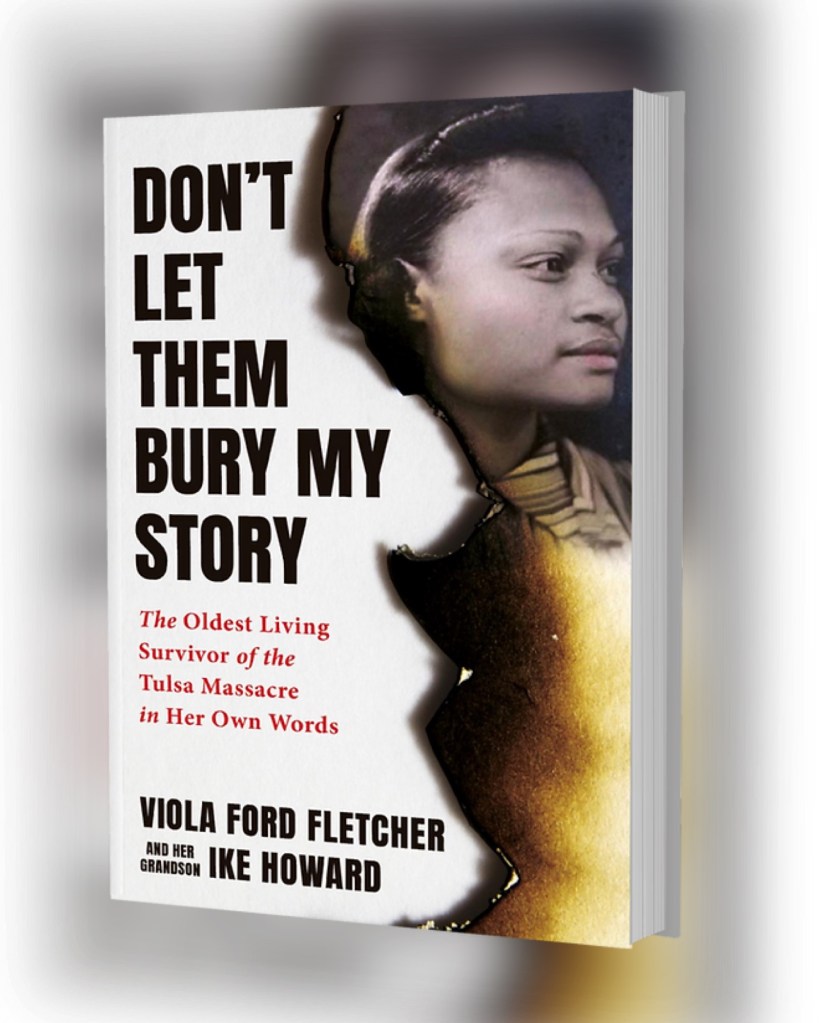
–Viola Ford Fletcher
The Bountiful Businesses of “Black Wall Street”
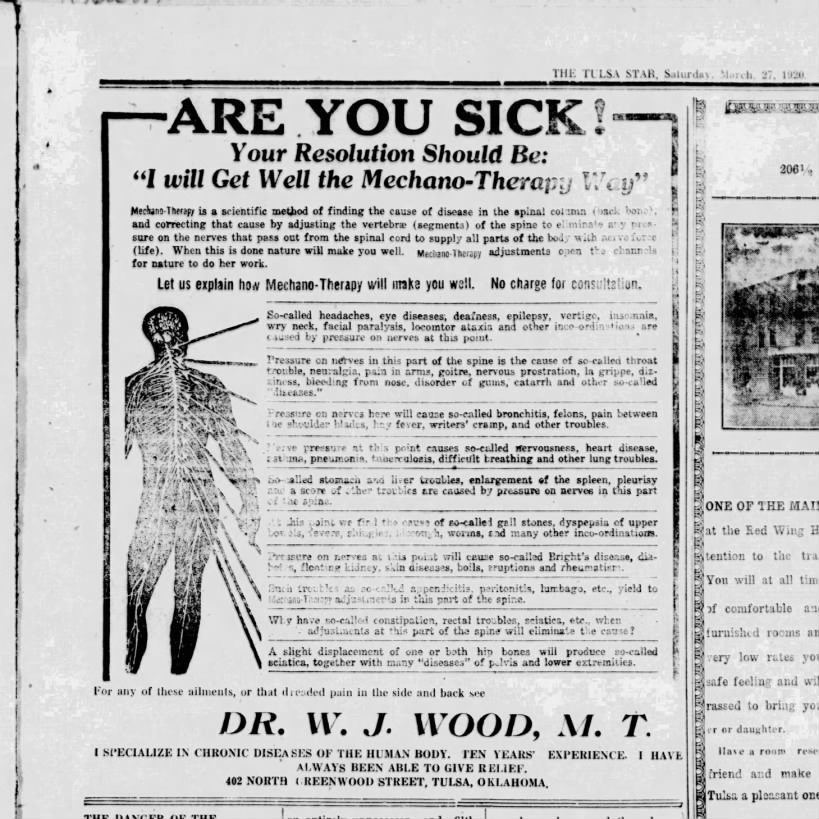
Tulsa, Oklahoma • Sat, Mar 27, 1920 Page 5
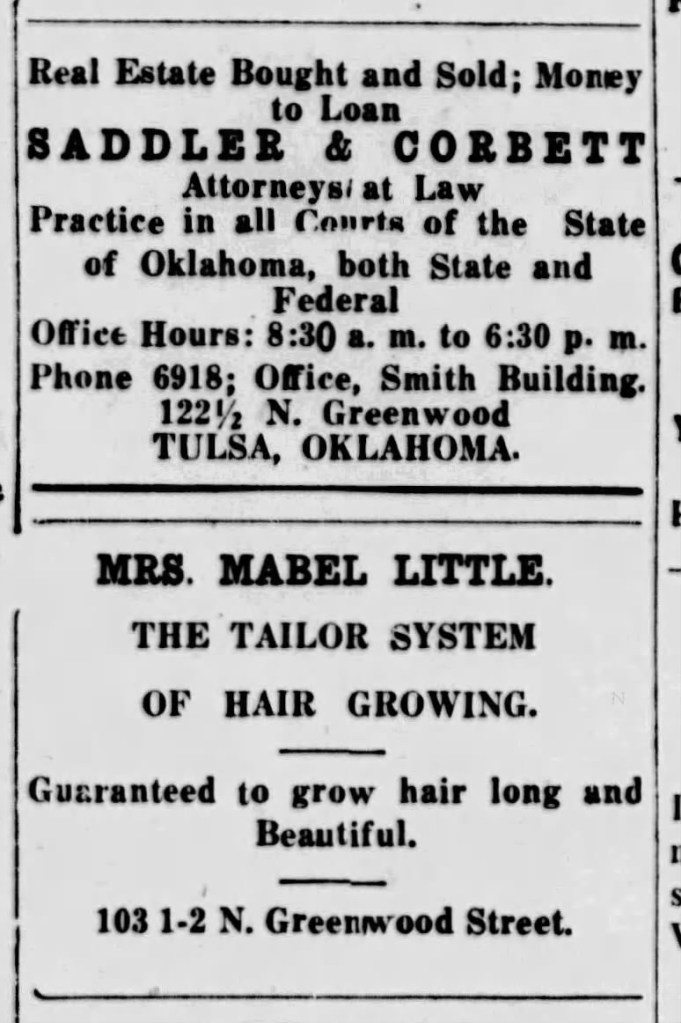
Tulsa, Oklahoma • Sat, Jan 31, 1920 Page 3
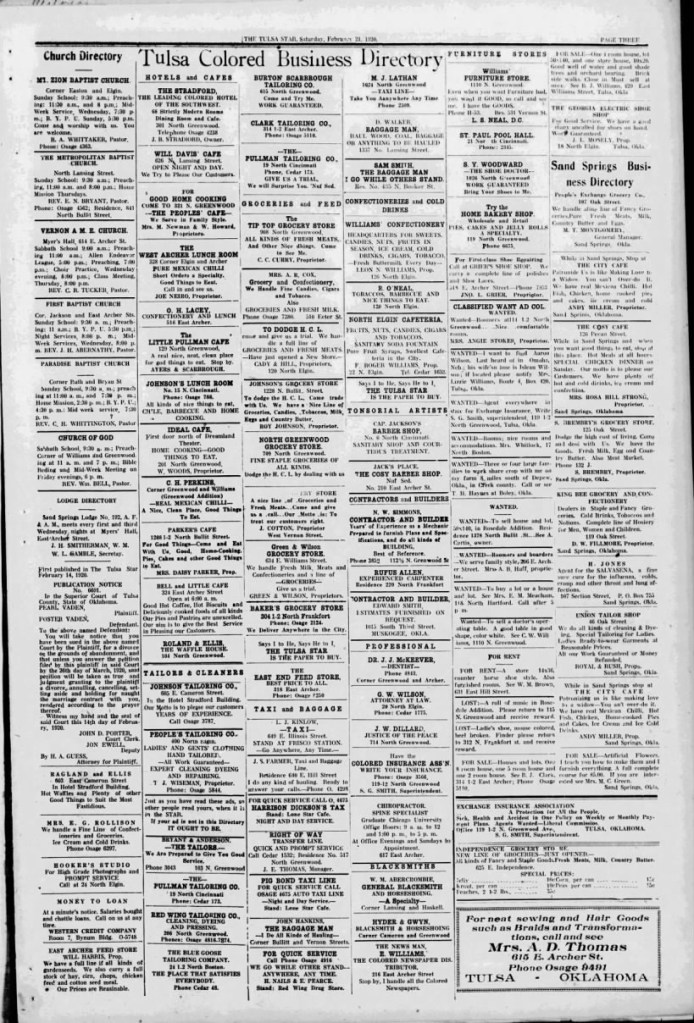
Tulsa, Oklahoma • Sat, Feb 21, 1920 Page 3
“DAMNABLE AND INEXCUSABLE”
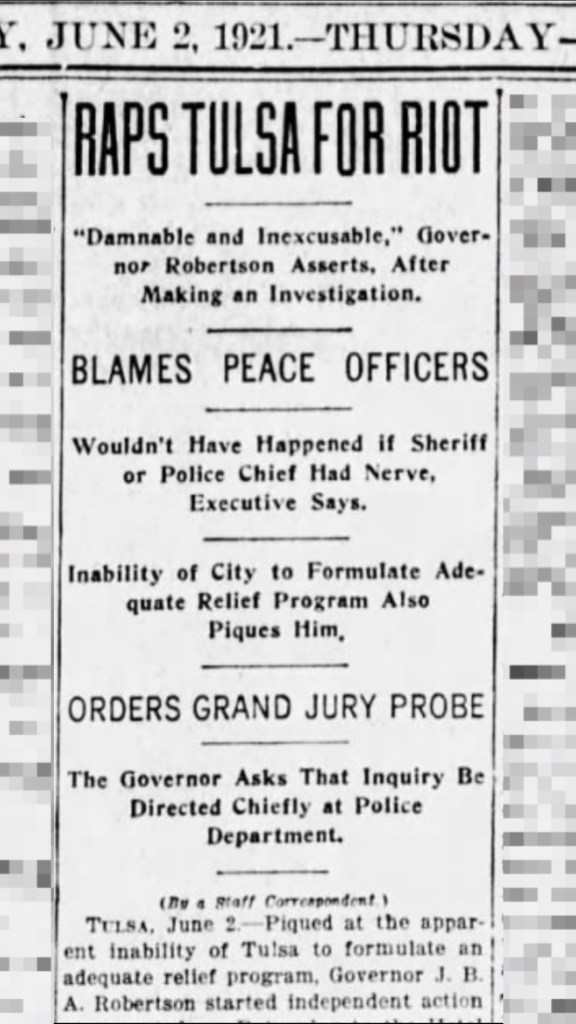
Kansas City, Missouri • Thu, Jun 2, 1921 Page 25
The official state report of the horrific events of 1921 in Tulsa, Oklahoma:
A Report by the Oklahoma Commission to Study the Tulsa Race Riot of 1921 (2001)
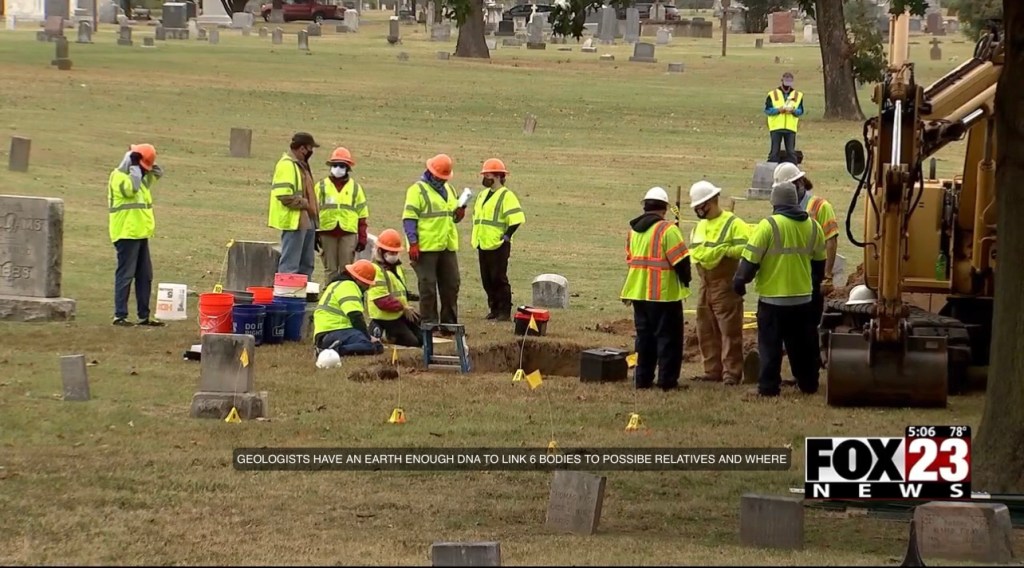
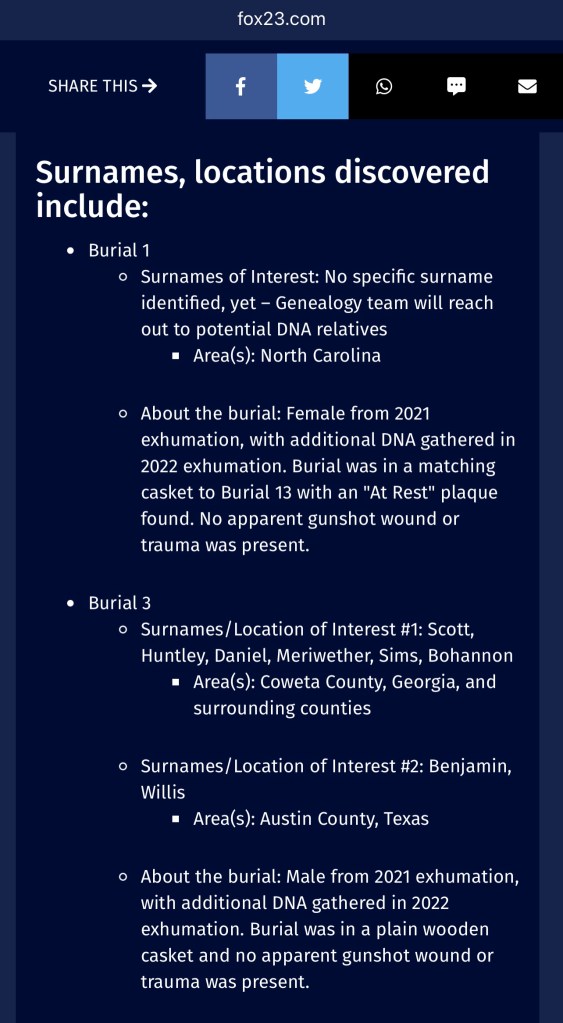
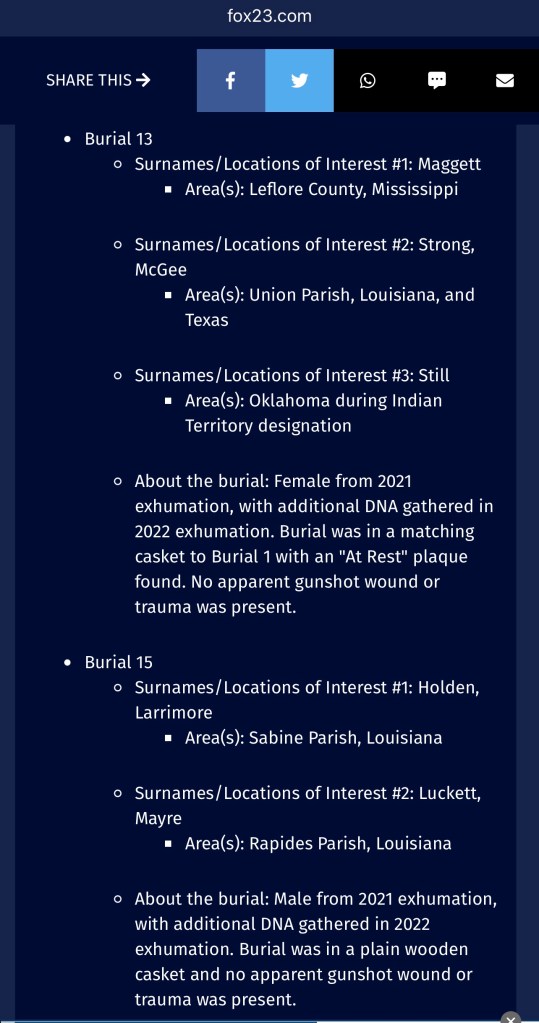
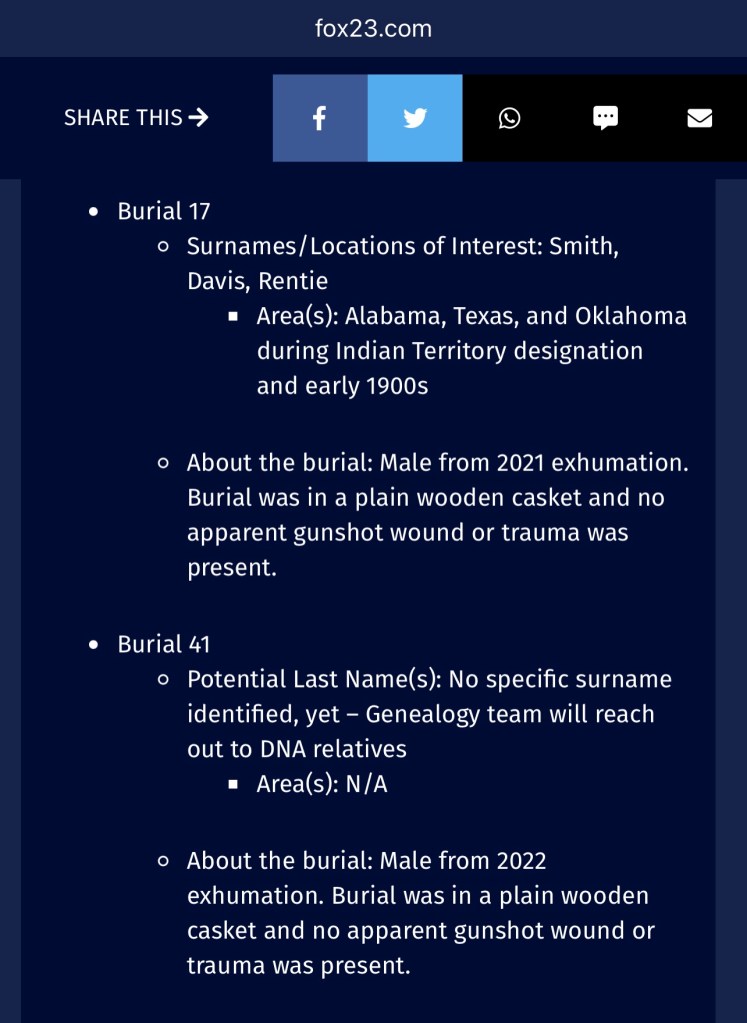
Surnames, locations discovered in 1921 Tulsa Race Massacre graves investigation FOX23 News
TULSA, Okla. — Tulsa Mayor G.T. Bynum and forensic scientists and genealogists announced an historic update to the investigation into mass graves from the 1921 Tulsa Race Massacre at Oaklawn Cemetery Wednesday.
The City of Tulsa said, of the 22 remains that had DNA extractions, six produced genetic genealogy profiles that can be tied to potential surnames and locations of interest. Individuals may recognize those surnames in their family tree.
Forensic scientists said they have three more bodies they believe they can get DNA from. The goal is to find the names of the those people. Now that they have specific names tied to some, they are calling for people with those names or family members with those names in certain locations to come forward.
…
“If somebody recognizes it and understands ‘Oh yes, my lines came to Tulsa’, or maybe yours didn’t but it was your grandmothers, or great-grandmother’s brother who came to Tulsa,” Alison Wilde with Intermountain Forensics said.
Information can be submitted online by clicking the “Provide Information” button at www.tulsa1921dna.org. You can also find instructions for participating with DNA in this project at the same website.
You can also email the genealogy team directly at idteam@tulsa1921dna.org.
“As a mayor who is trying to find our murdered neighbors, my plea to anyone who sees this is a simple one: If you happen to see this news, and see your last name and a place you’ve lived is flagged, and you have a family history in Tulsa, please reach out to the research team,” said Bynum.
Each of the genetic profiles from the six remains are uploaded into GEDmatch and Family Tree DNA. Individuals who voluntarily share their DNA tests with GEDmatch and/or Family Tree DNA will have these six profiles, and others produced from the investigation, compared to their own. This enables the genealogy team to identify DNA relatives, surnames and locations of interest that tie to the family trees of the unidentified remains.
Members of the genealogy team will reach out to extended DNA relatives who may have family trees or older living generations able to provide stories or additional DNA testing.
The city said these findings do not directly tie the remains found at Oaklawn Cemetery to the 1921 Tulsa Race Massacre. They also do not provide definitive identification for those remains at this time, and just because a surname is found does not mean those with that surname in the location of interest can be directly tied to the burial or the Tulsa Race Massacre.
T.he U.mbrage L.ives S.o A.ll can know…
This is their story and our situation.
The Genealogy Situation Room
 The Genealogy Situation Room
What always need to be made widely public are such instances of immense mass inhumanity.
However precious, human beings can actually be consciously or subconsciously perceived and treated as though they are disposable and, by extension, their suffering and death are somehow less worthy of external concern, sometimes even by otherwise democratic and relatively civilized nations.
In Toni Morrison’s novel Beloved, the narrator notes that, like the South, the Civil War era northern states also hated Black people but happened to hate slavery more.
Black people have been brutalized for centuries, and in the U.S. told they were not welcome — even though they, as a people, had been violently forced to the U.S. from their African home as slaves! And, as a people, there has been little or no reparations or real refuge for them here, since.
Clearly, human lives on this planet are not perceived as being of equal value/worth when, morally speaking, we all definitely should and even could be.
In fact, human beings can actually be perceived and treated as though they are disposable and, by extension, their suffering and death are somehow less worthy of external concern, sometimes even by otherwise democratic and relatively civilized nations.
A somewhat similar inhumane devaluation is observable in external attitudes, albeit perhaps on a subconscious level, toward the daily civilian lives lost in protractedly devastating war zones and famine-stricken nations.
The worth of such life will be measured by its overabundance and/or the protracted conditions under which it suffers; and those people can eventually receive meagre column inches on the back page of the First World’s daily news.
LikeLiked by 1 person
Such salient points. Thank you for sharing and stopping by!
LikeLike
You’re welcome; and thanks for allowing me the space.
LikeLiked by 1 person
So sad about the case being dismissed. I did not even know about the Tulsa massacre until I started studying genealogy a few years ago and that is also sad. I need to read her book.
LikeLiked by 1 person
I hope that many people will read and/or buy Ms. Viola’s book. I certainly plan to. There’s always something to learn about history, the good, the bad, the damnable.
Thanks for stopping by!
LikeLike